April 10
National Hug Your Dog Day
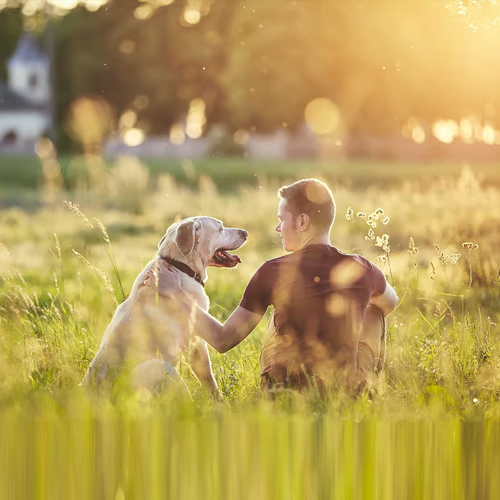
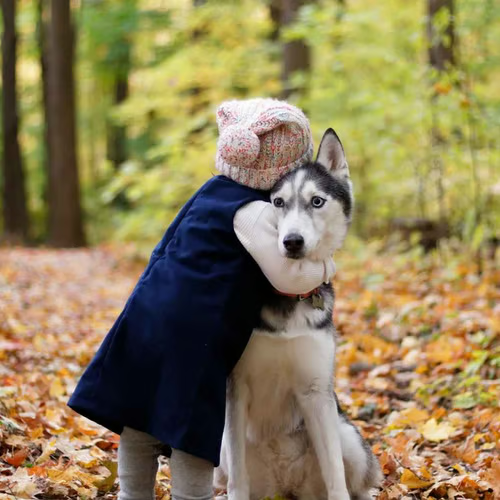
An annual observance on April 10 encouraging dog owners to show physical affection to their pets, grounded in the documented health and emotional benefits of the human-canine bond.
Ami Moore
Individual Initiative
National Hug Your Dog Day is widely attributed to Ami Moore, a Chicago-based professional dog trainer known as the 'Dog Whisperer of Chicago.' No primary documentation from Moore has been identified, and the exact founding year is undocumented.

Introduction
National Hug Your Dog Day is built on a scientific fact that most dog owners sense but few can articulate: when you and your dog look at each other, both of you experience a measurable spike in oxytocin, the same hormone that bonds mothers to infants. A 2015 study published in Science confirmed that this mutual hormonal feedback loop exists between humans and dogs but not between humans and other domesticated animals, including wolves raised by humans.
This biochemistry matters because it explains why the human-dog relationship is qualitatively different from other pet bonds. Dogs did not just learn to live alongside humans. Over 15,000 or more years of co-evolution, they developed the neurological machinery to emotionally connect with us, and we adapted to respond in kind.
National Hug Your Dog Day History
The relationship between humans and dogs is the oldest interspecies partnership in existence. Genetic evidence places dog domestication at at least 15,000 years ago, with some studies suggesting it may have occurred as early as 40,000 years ago. Dogs were the first species domesticated by humans, predating agriculture and the domestication of cattle, sheep, and cats by thousands of years. The partnership likely began around shared hunting: wolves that tolerated human proximity gained access to food scraps, and humans gained an alert system and hunting partner.
Over millennia, this relationship shifted from utilitarian to emotional. Dogs developed the ability to read human facial expressions, follow pointing gestures (something chimpanzees struggle with), and respond to vocal tone. Humans, in turn, developed a neurological response to dogs that mirrors our response to human infants.
The science of the bond
The biological foundation of the human-dog bond was confirmed in a landmark 2015 study published in Science by Japanese researcher Takefumi Kikusui and colleagues. The study found that when dogs and their owners gaze at each other, both species experience elevated levels of oxytocin, the hormone responsible for social bonding, trust, and attachment. This mutual oxytocin loop is the same mechanism that bonds mothers to newborns. Critically, the study found that this loop did not occur between humans and hand-raised wolves, suggesting it is a product of domestication, not shared living.
The health implications are significant. Research reviewed by Harvard Medical School and the NIH has linked dog ownership to lower blood pressure, reduced cardiovascular disease risk, and decreased cortisol (stress hormone) levels. Dog owners walk an average of 20 minutes more per day than non-owners. A 2023 American Psychiatric Association poll found that 86% of pet owners reported their pets had a positive effect on their mental health.
The holiday
National Hug Your Dog Day was created by Ami Moore, a Chicago-based professional dog trainer and behavior expert known as "The Dog Whisperer of Chicago." Moore's training career focused on understanding canine psychology and improving the relationship between dogs and their owners. The holiday's exact founding year is not documented, but it gained traction through holiday calendar sites during the 2010s. The observance encourages owners to physically express affection to their dogs, though with a caveat: not all dogs enjoy being hugged, and recognizing your dog's individual comfort level is part of responsible ownership.
National Hug Your Dog Day Timeline
Dogs become the first domesticated animal
First modern dog show held
HABRI founded to study human-animal bonds
Science confirms mutual oxytocin loop
National Hug Your Dog Day established
How to Celebrate National Hug Your Dog Day
- 1
Learn your dog's hug language
Not all dogs enjoy being hugged — many tolerate it but show stress signals like lip licking, yawning, or turning away. The American Kennel Club explains how to read your dog's body language and find the form of affection they actually prefer.
- 2
Take a longer walk than usual
The simplest way to bond with your dog is to extend your daily walk by 15-20 minutes. Let your dog set the pace and explore. The shared movement triggers oxytocin in both of you.
- 3
Read the 2015 oxytocin study
The landmark study on mutual oxytocin in dogs and humans is available through Science magazine. It is one of the most important papers ever published on the human-animal bond.
- 4
Donate to a dog rescue organization
If you do not currently have a dog, contribute to an organization that helps dogs find homes. The ASPCA connects potential adopters with dogs in shelters nationwide.
- 5
Schedule a veterinary checkup
One of the most concrete ways to show your dog love is to ensure their health is monitored. Use National Hug Your Dog Day as a reminder to schedule a wellness visit, especially if it has been more than a year.
Why We Love National Hug Your Dog Day
- A
The human-dog bond is biologically unique
Dogs are the only non-human species proven to trigger a mutual oxytocin feedback loop with humans through eye contact. This biochemical mechanism, confirmed in a 2015 Science study, is the same one that bonds mothers to infants. No other domesticated animal, including hand-raised wolves, produces this effect.
- B
Dog ownership is a measurable health intervention
Dog owners walk an average of 20 minutes more per day, have lower blood pressure, and show reduced cardiovascular disease risk. A 2023 APA poll found 86% of pet owners report positive mental health effects. These are not anecdotal claims — they are outcomes documented in peer-reviewed research.
- C
44% of American households are dog households
Nearly half of all U.S. households include at least one dog, making the human-dog bond one of the most common interspecies relationships on Earth. The number means that any health or emotional benefit of dog ownership operates at a population scale.
Holiday Dates
| Year | Date | Day |
|---|---|---|
| 2023 | Monday | |
| 2024 | Wednesday | |
| 2025 | Thursday | |
| 2026 | Friday | |
| 2027 | Saturday |