May 6
National Tourist Appreciation Day
An annual observance on May 6 recognizing the economic, cultural, and community contributions that tourists make to destinations across the United States.
Unknown
Community Origin
National Tourist Appreciation Day is attributed to travel enthusiasts who initiated the observance on social media in 2015. No specific founder or organization has been documented.

Introduction
Tourists in the United States spend $696 million per day. In 2024, international visitors alone injected over $253.9 billion into the American economy, a 12% increase over the previous year. The travel industry generated $2.9 trillion in total economic output and supported more than 15 million jobs.
Those numbers represent real effects in real places: the hotel worker in Orlando, the restaurant owner in New Orleans, the park ranger in Yellowstone. But tourism also generates friction. In 2024, 41% of Americans expressed concern about overtourism, citing pollution, rising housing costs, and overcrowded sites. National Tourist Appreciation Day exists in that tension, acknowledging tourists' economic contributions while recognizing that the relationship between visitors and communities is more complicated than a simple thank-you.
National Tourist Appreciation Day History
For most of human history, long-distance travel was undertaken out of necessity: trade, war, pilgrimage, or migration. Travel for pleasure was an aristocratic luxury. The Grand Tour, a tradition that peaked in the 17th and 18th centuries, sent wealthy young European men through France, Italy, and Greece as an educational rite of passage. By the 19th century, America's Gilded Age elite adopted the practice, crossing the Atlantic to absorb European culture, a phenomenon Mark Twain satirized in The Innocents Abroad in 1869.
The person who made travel accessible to ordinary people was Thomas Cook, a British entrepreneur who organized his first guided tour to the United States in 1866. Cook invented the package holiday: transportation, accommodation, and meals bundled into a single price. He also created early forms of traveler's cheques, allowing tourists to carry money safely. His model transformed travel from an improvised adventure into a consumer product.
The automobile and the American road trip
In the United States, the automobile fundamentally changed who could travel and where they could go. By 1915, car travel had shifted from novelty to routine, and a network of highways began connecting cities to rural destinations. The creation of the National Park Service on August 25, 1916, gave Americans a federally managed system of natural destinations worth driving to, linking tourism with national identity.
The real explosion came after World War II. Rising middle-class wealth, widespread paid vacation benefits, growing car ownership, and the expansion of commercial air travel turned tourism into a mass phenomenon. Motels, roadside attractions, and theme parks emerged to serve a population that was, for the first time, traveling in enormous numbers.
The modern industry
By 2024, the US travel industry generated $2.9 trillion in economic output and supported more than 15 million American jobs. International visitors spent over $253.9 billion in the US that year, averaging $696 million per day. The National Park Service recorded a record 331.9 million recreation visits in 2024, with Great Smoky Mountains leading at 12.19 million visits, followed by Zion (4.94M), Grand Canyon (4.91M), and Yellowstone (4.74M).
But this growth has created pressure. In 2024, 41% of Americans expressed concern about overtourism, citing pollution and waste (60%), rising living costs for locals (59%), overcrowded sites (52%), and strain on infrastructure (47%). The tension between tourism's economic benefits and its community costs has become one of the defining questions in the industry.
The observance
National Tourist Appreciation Day is attributed to travel enthusiasts who initiated the observance on social media in 2015. No specific founder or organization has been documented.
National Tourist Appreciation Day Timeline
Thomas Cook organizes the first package tour to America
National Park Service established
Post-war boom creates mass tourism
National Tourist Appreciation Day emerges online
National parks set visitation record
How to Celebrate National Tourist Appreciation Day
- 1
Be a good tourist wherever you are
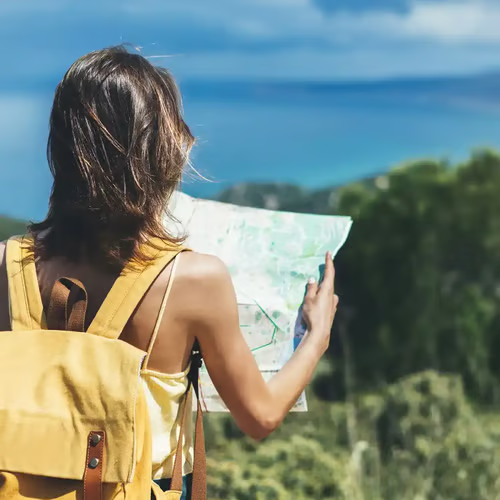
Follow local guidelines at parks and historic sites, support locally owned businesses over chains, tip generously, and be mindful of noise and waste. The simplest way to appreciate tourists is to be one worth appreciating.
- 2
Thank a hospitality worker
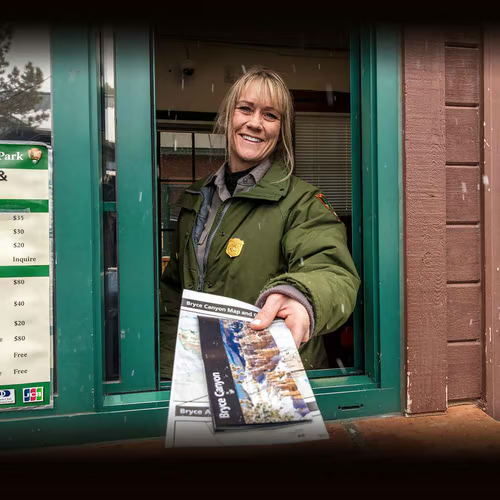
The travel industry employs over 15 million Americans. Hotel staff, restaurant servers, tour guides, and park rangers make tourism possible. A direct, specific expression of gratitude takes seconds and is remembered much longer than you might expect.
- 3
Explore your own community as a tourist
Visit a local museum, historic site, or park you have never been to. The National Park Service's park finder includes over 400 sites across the country, many of which are free and close to major cities.
- 4
Learn about responsible tourism
The US Travel Association research page publishes data on tourism's economic impact and emerging trends like sustainable travel, which was a $66 billion market in 2023 and growing at nearly 10% annually.
- 5
Visit a national park during the off-season
The National Park Service set a record with 331.9 million recreation visits in 2024. Off-season travel reduces crowding at popular sites, supports local economies during slower periods, and often provides a better experience. Many parks are quieter and more beautiful in shoulder seasons.
Why We Love National Tourist Appreciation Day
- A
Tourism is one of the largest economic forces in the country
The US travel industry generated $2.9 trillion in economic output in 2024 and supported over 15 million jobs. International visitors alone spent $253.9 billion, averaging $696 million per day. For many communities, tourism is the primary source of employment and tax revenue.
- B
Overtourism is straining the places people love most
In 2024, 41% of Americans expressed concern about overtourism. The top issues were pollution and waste (60%), rising living costs for locals (59%), overcrowded sites (52%), and strain on infrastructure (47%). National parks, beach towns, and major cities are all navigating the tension between welcoming visitors and protecting the places that attract them.
- C
How tourists behave directly shapes local quality of life
Tourism creates jobs and revenue, but it also affects housing prices, traffic, noise, environmental quality, and the character of neighborhoods. Appreciating tourists means appreciating the communities that host them, and recognizing that responsible travel requires awareness of the impact visitors have on the places they visit.
Holiday Dates
| Year | Date | Day |
|---|---|---|
| 2023 | Saturday | |
| 2024 | Monday | |
| 2025 | Tuesday | |
| 2026 | Wednesday | |
| 2027 | Thursday |