March 26
Nike Air Max Day
A sneaker culture observance on March 26 celebrating the Nike Air Max line and its innovation of visible Air cushioning technology in athletic footwear.
Nike, Inc.
Corporate Initiative
Nike established Air Max Day in 2014, marking the 27th anniversary of the Air Max 1's release on March 26, 1987. The company celebrated with a limited-edition Air Max 1 featuring '3.26' printed on the tongue.

Introduction
The shoe that started Nike Air Max Day almost did not exist. When designer Tinker Hatfield proposed cutting a window into the midsole of a running shoe to expose its air cushioning, colleagues at Nike called it "weird and overdesigned." Some internally lobbied to kill the project.
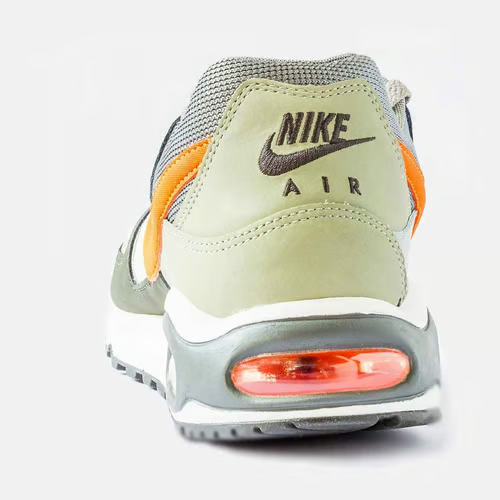
What Hatfield had seen in Paris made the risk worth taking. The Centre Pompidou, a building that displays its mechanical systems on the outside, convinced him that showing people the technology inside a shoe would change how they thought about it. He was right. The Air Max 1 launched on March 26, 1987, and the visible Air unit became one of the most recognized design elements in footwear history.
Nike Air Max Day History
Nike Air technology did not begin with Tinker Hatfield or the Air Max 1. It started with an aerospace engineer named Marion Frank Rudy. Rudy had worked on projects at NASA and understood how pressurized gas could be used as a cushioning system. In 1977, he approached Nike co-founder Phil Knight with a prototype: flexible polyurethane bags filled with dense, inert gas, embedded in a shoe sole.
Nike tested the concept and released the Tailwind in 1978, the first shoe to use Air-Sole technology. The air unit was sealed inside the midsole where nobody could see it. Runners could feel the cushioning difference, but there was nothing to distinguish the shoe visually from any other running shoe on the shelf.
The building that changed shoe design
Tinker Hatfield joined Nike as a corporate architect, designing buildings and retail spaces. On a trip to Paris, he visited the Centre Pompidou, a museum designed by Renzo Piano and Richard Rogers that puts its structural systems on the outside: pipes, ducts, and escalators are all exposed and color-coded. The building had been controversial since it opened in 1977, but its logic struck Hatfield: showing people how something works makes them trust it more.
Hatfield applied that idea to the Air-Sole unit. He proposed cutting a window into the midsole to expose the air bag. The idea met resistance inside Nike. Some staff called it weird. Others worried the window would make the shoe look fragile. Hatfield later said he nearly lost his job pushing the concept through the approval process.
March 26, 1987
The Air Max 1 launched on March 26, 1987, in Sport Red and White. It was the first shoe to let a consumer see the cushioning technology inside. The visible Air unit became the shoe's defining feature and transformed Nike Air from a hidden engineering advantage into a recognizable design element. Within a few years, Nike expanded visible Air across the entire Air Max line: the Air Max 90, Air Max 95, and Air Max 97 each pushed the concept further.
From anniversary to annual event
Nike designated March 26 as Air Max Day in 2014, marking the 27th anniversary of the original release. The first celebration featured a limited-edition Air Max 1 with "3.26" printed on the tongue and a volt-green midsole. The day has since grown into an annual event featuring new releases, design collaborations with artists and retailers, and community events in cities worldwide.
Nike Air Max Day Timeline
NASA engineer pitches air cushioning to Nike
Nike Tailwind becomes the first Air shoe
Air Max 1 launches with the first visible Air unit
Air Max 95 introduces forefoot visible Air
Nike establishes Air Max Day
How to Celebrate Nike Air Max Day
- 1
Explore the full Air Max timeline
Browse the Nike Air Max collection to see how visible Air technology has evolved from the original 1987 window to today's full-length units. Every generation built on Hatfield's original insight.
- 2
Visit the Centre Pompidou virtually
See the building that inspired the Air Max 1. The Centre Pompidou's website offers virtual tours and architectural history of the inside-out design that convinced Hatfield to expose Nike's Air technology.
- 3
Wear your Air Max collection
Air Max Day is the unofficial holiday for breaking out a favorite pair. Post your rotation on social media using #AirMaxDay to join the global community of collectors and enthusiasts who treat March 26 as a sneaker holiday.
- 4
Learn about sneaker design as a career
Hatfield started as an architect, not a shoe designer. Nike's corporate site includes information about design careers and the company's history of recruiting talent from unexpected backgrounds.
- 5
Watch the Abstract episode on Hatfield
The Netflix documentary series Abstract: The Art of Design dedicated an episode to Tinker Hatfield, covering his journey from pole vaulter to architect to the designer behind some of the most iconic sneakers ever made.
Why We Love Nike Air Max Day
- A
The shoe changed how athletic footwear is designed
Before the Air Max 1, shoe technology was invisible. The visible Air unit established the principle that consumers should see and understand the engineering inside their footwear. This approach influenced not just Nike but the entire industry, driving a shift toward visible technology platforms in brands from Adidas (Boost) to Asics (GEL).
- B
Sneakers became cultural artifacts worth billions
The Air Max line helped transform sneakers from athletic equipment into fashion and cultural objects. The global sneaker market was valued at approximately $79 billion in 2023, projected to reach $128 billion by 2030. Limited-edition Air Max collaborations with designers like Travis Scott, Patta, and Supreme regularly sell on resale platforms for multiples of their retail price.
- C
One designer's vision reshaped a company
Tinker Hatfield's career at Nike demonstrates how a single design decision can alter a company's trajectory. The visible Air concept he fought for became the foundation of Nike's most enduring product line. Hatfield went on to design the Air Jordan III, IV, and many others, but the Air Max 1 remains the design that proved showing consumers how a product works can be more powerful than hiding it.
Holiday Dates
| Year | Date | Day |
|---|---|---|
| 2023 | Sunday | |
| 2024 | Tuesday | |
| 2025 | Wednesday | |
| 2026 | Thursday | |
| 2027 | Friday |