January 14
Orthodox New Year
Ring in the Orthodox New Year with traditional foods, festive celebrations, and new beginnings!

Introduction
Get ready to ring in the New Year not once, but twice! Orthodox New Year, also known as Old New Year, is celebrated on January 14 and marks the beginning of a new year according to the Julian calendar. This holiday is mainly observed by Orthodox Christians and has been celebrated since the 14th century in Eastern Europe and parts of Asia. It's a day filled with traditional customs and rituals, such as fortune-telling for the upcoming year and feasting on delicious foods. So mark your calendars and get ready to start the year off right – twice!
Orthodox New Year Timeline
How to Celebrate Orthodox New Year
1
Host a traditional feast
Invite friends and family over for a traditional New Year's feast, complete with dishes like kutia and holubtsi. This is a great way to connect with your cultural heritage and celebrate the holiday together.
2
Watch a fireworks display
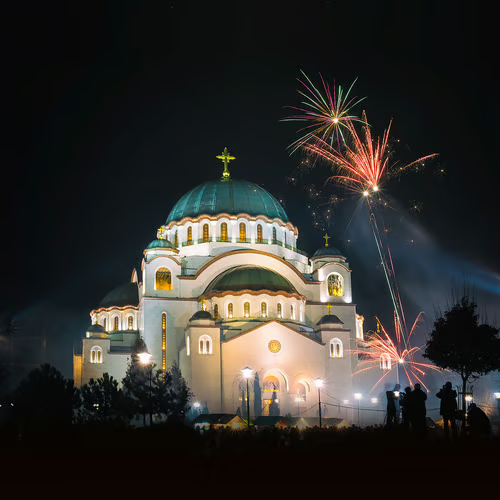
Many cities and towns have fireworks displays to mark the beginning of the new year. Gather with your loved ones and watch the spectacular show together.
3
Attend a church service
For those who observe Orthodox Christianity, attending a church service on Orthodox New Year is a meaningful way to celebrate the holiday. Take part in the liturgy and connect with your faith community.
4
Give gifts to loved ones
In some cultures, it is traditional to exchange gifts on Orthodox New Year. Show your loved ones how much you care by giving them a thoughtful and meaningful gift.
5
Participate in a polar bear plunge
For the brave and adventurous, participating in a polar bear plunge on Orthodox New Year is a unique and exhilarating way to ring in the new year. Just be sure to bundle up afterwards!
Why Orthodox New Year is Important
It celebrates a different cultural tradition
Orthodox New Year is celebrated in many countries, mainly in Eastern Europe and the Middle East. By recognizing this holiday, we are acknowledging and honoring the diverse cultures and traditions that exist around the world.
It reminds us to reflect on our past year
Orthodox New Year falls on January 14th, which is almost two weeks after the widely celebrated Gregorian New Year (January 1st). This gives us more time to reflect on our past year, set new goals and intentions, and make positive changes for the future.
It brings people together in celebration
Just like any New Year's celebration, Orthodox New Year is a time for gathering with loved ones and celebrating new beginnings. Whether it's through food, music, dance or other customs, it allows people to come together and strengthen their bonds with one another.
Holiday Dates
| Year | Date | Day |
|---|---|---|
| 2023 | Saturday | |
| 2024 | Sunday | |
| 2025 | Tuesday | |
| 2026 | Wednesday | |
| 2027 | Thursday |