April 25
National Lingerie Day
An annual observance on April 25 celebrating intimate apparel, its history as a reflection of changing social norms, and its evolution from restrictive garments to expressions of comfort and self-confidence.
Unknown
Community Origin
National Lingerie Day emerged from the lingerie industry in the early 2010s, with the first recorded observance on April 25, 2014. No single founder has been identified.

Introduction
The history of lingerie is not primarily about fashion. It is a record of how societies have tried to control and then liberate the human body. For centuries, intimate apparel was designed to reshape women's figures to match prevailing ideals: the corset compressed the waist, the bustle exaggerated the hips, the bullet bra defined the 1950s silhouette. Each era's undergarments were engineering projects built to enforce a specific shape.
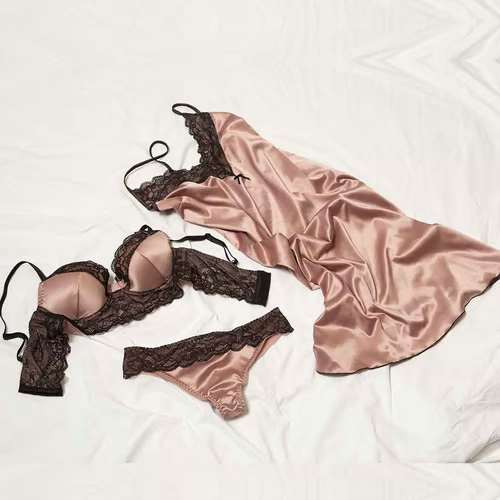
That history makes the modern lingerie industry's turn toward comfort, inclusivity, and individual choice a significant shift. The global market, valued at over $90 billion in 2024, is now shaped more by what consumers demand than by what designers dictate. National Lingerie Day recognizes both the craftsmanship behind intimate apparel and the centuries of social history embedded in every design decision.
National Lingerie Day History
The story of lingerie begins long before the word existed. Ancient civilizations used linen bands to bind or support the chest, and variations of corset-like garments appear in artwork from Minoan Crete dating to approximately 1600 BCE. But the modern history of intimate apparel starts with the corset, which dominated Western fashion for nearly 400 years.
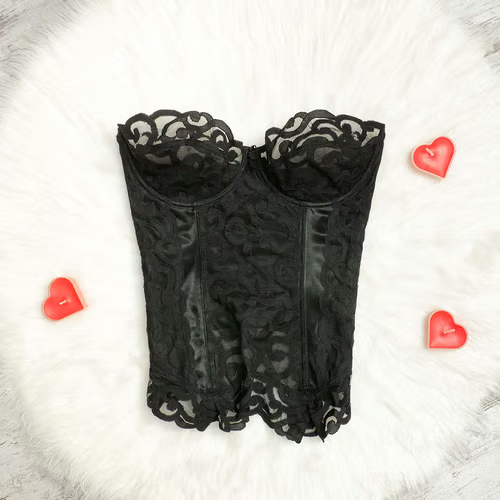
By the 1830s, the corset had become the essential undergarment for women across all social classes. Steel boning replaced earlier whalebone, metal clasps allowed for increasingly tight lacing, and the garment enforced the hourglass silhouette that Victorian society demanded. Beneath the corset, women wore layers of chemises, drawers, and petticoats, each designed to support the structure above it. The mid-19th century ideal required a waist so narrow that some women had ribs removed to achieve it, a practice that became a lasting symbol of the era's extremes.
The bra replaces the corset
The term "brassiere" first appeared in Vogue magazine in 1907 and was added to the Oxford English Dictionary by 1911. But it was Mary Phelps Jacob (later known as Caresse Crosby) who created the first commercially viable alternative to the corset. In 1914, she patented a "backless brassiere" made from two handkerchiefs and pink ribbon, a design so simple that it transformed the industry. Jacob sold the patent to Warner Brothers Corset Company for $1,500, a sum equivalent to roughly $46,000 today. Warner went on to earn over $15 million from the design.
World War I accelerated the transition. The U.S. War Industries Board asked women to stop buying corsets, reportedly saving an estimated 28,000 tons of metal for the war effort. By the 1920s, the flapper era embraced a straighter silhouette, and bandeau-style bras that flattened the chest replaced the hourglass corset. In 1932, S.H. Camp and Company introduced the A through D cup sizing system, the first standardized method for fitting bras by breast size.
Lingerie becomes an industry
The 1950s celebrated a return to defined curves, with the bullet bra and stiff foundation garments reshaping the silhouette once more. The invention of spandex in 1959 by chemist Joseph Shivers at DuPont changed everything: stretch fabrics could now conform to the body without rigid boning.
In 1977, Roy Raymond opened the first Victoria's Secret store in San Francisco, creating a retail environment designed to make men comfortable buying lingerie. The brand grew to dominate American intimate apparel, reaching a 33% share of the North American market by 2016. But consumer expectations shifted: demand for inclusive sizing, diverse representation, and comfort-first design caused Victoria's Secret's share to decline to approximately 20% by 2024, as smaller brands built around body positivity gained market share.
The observance
National Lingerie Day was first observed on April 25, 2014, promoted through social media campaigns by lingerie retailers. No single founder has been identified; the observance emerged from the industry itself as a celebration of intimate apparel's history, craftsmanship, and evolving role in self-expression.
National Lingerie Day Timeline
The corset era begins in earnest
Mary Phelps Jacob patents the modern bra
S.H. Camp introduces cup sizing
Spandex is invented
Victoria's Secret is founded
First recorded National Lingerie Day observance
How to Celebrate National Lingerie Day
- 1
Learn the history of undergarments
Britannica's overview of underwear history traces intimate apparel from ancient civilizations through the corset era to the modern bra, providing context for how dramatically these garments have changed.
- 2
Read about the evolution of the bra
The ELLE bra history timeline covers key milestones from Mary Phelps Jacob's 1914 patent to the introduction of cup sizes and the cultural shifts that shaped each decade's designs.
- 3
Get properly fitted
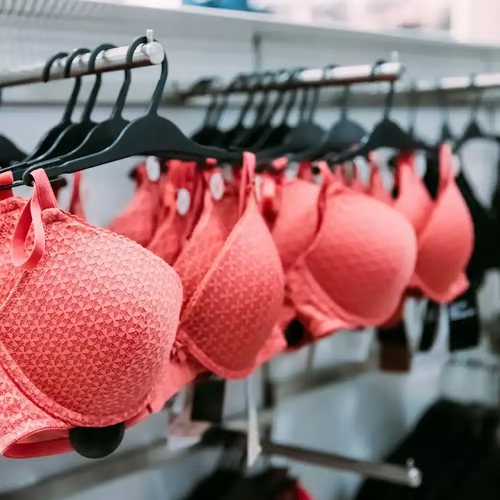
Studies consistently show that a significant percentage of women wear the wrong bra size. Use the day to get a professional fitting at a department store or specialty lingerie shop. A proper fit improves comfort, support, and the way clothing drapes.
- 4
Support brands prioritizing comfort and inclusivity
The lingerie industry has diversified beyond traditional brands. Look for companies that offer extended size ranges, adaptive designs for people with disabilities, and transparent information about their manufacturing and materials.
- 5
Explore sustainable intimate apparel options
Sustainable lingerie brands use organic cotton, bamboo, and recycled materials while maintaining ethical labor practices. If you are replacing worn undergarments, consider brands that publish their sourcing and manufacturing standards.
Why We Love National Lingerie Day
- A
The lingerie industry reflects broader shifts in cultural values
Victoria's Secret's North American market share declined from 33% in 2016 to approximately 20% in 2024, driven by consumer demand for inclusive sizing and diverse representation. The shift demonstrates how intimate apparel is uniquely sensitive to cultural expectations about body image, comfort, and self-expression.
- B
Sustainability is reshaping intimate apparel
The sustainable underwear market is valued at approximately $500 million and growing rapidly. Brands are incorporating organic cotton, bamboo, and recycled fabrics while building transparent supply chains. The intimate apparel industry's sustainability movement reflects a broader consumer preference for ethical production across fashion.
- C
Lingerie history documents centuries of changing attitudes toward the body
From corsets that compressed the ribs to bandeau bras that flattened the chest to bullet bras that exaggerated it, each era's intimate apparel was designed to reshape women's bodies to match prevailing ideals. The modern turn toward comfort and individual choice represents a significant departure from that pattern.
Holiday Dates
| Year | Date | Day |
|---|---|---|
| 2023 | Tuesday | |
| 2024 | Thursday | |
| 2025 | Friday | |
| 2026 | Saturday | |
| 2027 | Sunday |